
The IT industry is a rapidly evolving sector that plays a crucial role in the digital transformation of businesses worldwide. In 2023, several IT hiring trends are expected to shape the global IT hiring landscape. These trends reflect the changing demands of organizations as they adapt to emerging technologies, prioritize cybersecurity, and leverage data-driven insights. In the first part, we revealed only the first 5 IT hiring trends in 2023. This article will discuss the latest trends in hiring for the technology sector.
The global IT hiring market is expected to continue to grow in 2023, with demand for skilled IT professionals outpacing supply. According to a recent report by Gartner, global IT spending is expected to grow by 3.8% in 2023, reaching $4.5 trillion. This growth will be driven by several factors, including the continued adoption of cloud computing, the increasing use of big data and analytics, and the need for security and compliance solutions.

If you still haven’t read the first part of this article: 5 Global IT Hiring Trends in 2023: Part №1
Hybrid Work Is Becoming the Norm
The main consequence of the appearance of COVID-19, was that the online format of work has become an everyday practice for IT companies, and not only in this industry. That’s why this trend is probably the most relevant in the business world today. Let’s take a look at its main advantages.
Benefits of Hybrid Work for Recruitment:
- Flexibility. Employees are free to choose where they work, whether it’s from home, a coworking space, or the office.
- Improved Employee Well-Being. Working from home can enhance work-life integration, reduce burnout, and support mental health.
- Increased Productivity. The absence of office distractions, such as frequent meetings or interruptions from colleagues, allows individuals to focus on their tasks and complete them efficiently.
- Expanded Talent Pool. With location barriers diminished, organizations can hire employees from different geographical areas or tap into remote talent worldwide.
- Worldwide Environmental Impact. Hybrid work can contribute to a positive environmental impact.
According to a survey conducted by Gallup in February 2023, six in ten remote-capable employees (60%) prefer some degree of remote-work flexibility going forward, and specifically, six in ten prefer hybrid work. This suggests that most recruiting agencies are now hiring qualified employees from around the world, while simultaneously maintaining their current budget and the quality of their work.
Proactive Candidate Engagement
Proactive candidate engagement is a recruitment strategy that involves reaching out to potential candidates before they even apply for a job. This is particularly crucial for IT companies, given the competitive nature of the industry and the high demand for skilled technology professionals. But what do the statistics say about it?

There are many benefits to proactive candidate engagement. It can help you:
- Attract Top Talent. By reaching out to potential candidates before they even apply, you can increase your chances of attracting top talent to your company.
- Save Time and Money. Proactive candidate engagement can save you time and money in the long run by reducing the need to post job openings and screen large numbers of resumes.
- Improve Your Employer Brand. Proactive candidate engagement can help you improve your employer brand by showing potential candidates that you are a desirable place to work.
According to LinkedIn, 70% of the global workforce is passive — meaning they’re not actively searching for a new role but could be persuaded if presented with the right opportunity — putting ever more emphasis on employers to make themselves desirable to work for and fine-tune their recruitment processes. The remaining 30% active candidates will likely have a plethora of options, and you could often find out that they’re not as good a fit for your role as their passive counterparts.
Branding
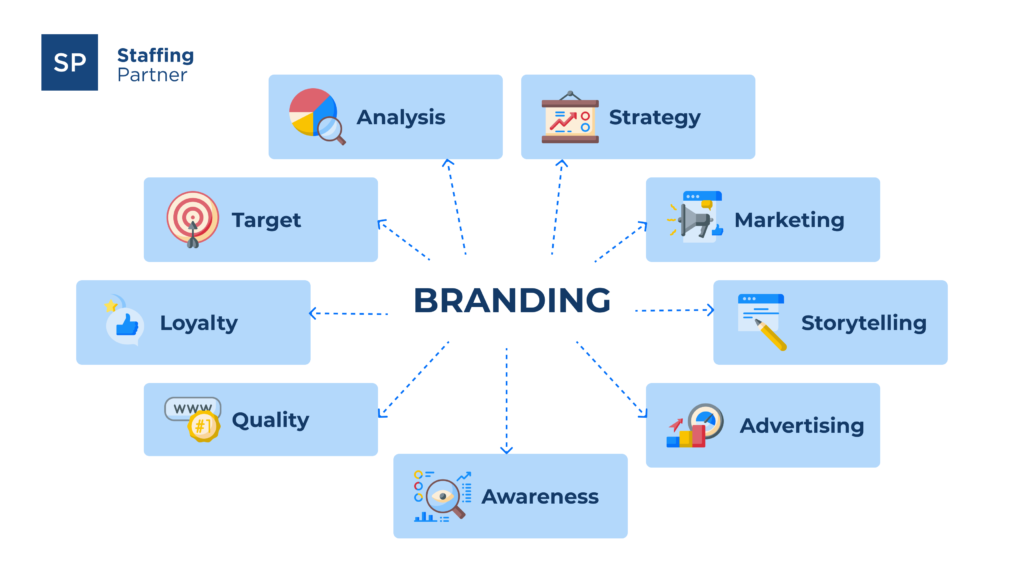
In 2023, branding will be crucial in shaping global IT hiring trends. With the help of this hiring trend, the company itself has become recognizable among clients and other large companies. There’s ample evidence that a great employer brand makes it easier to recruit and impacts the business’s bottom line in multiple ways.
For most companies, those numbers can equate to millions of dollars in savings and reduced time to recruit. The top 3 places to expand your employer brand include your company website (69%), online professional networks (61%), and social media (47%).
Culture will Become Increasingly Important
Company culture will become increasingly important in IT hiring trends in 2023. As the demand for skilled IT professionals rises, organizations must differentiate themselves from their competitors and devise strategies to draw in the best talent available. A strong company culture can help companies do just that.
Specific Company Cultures that are Becoming Increasingly Popular in IT:
- Remote-First Culture. This culture allows employees to work from anywhere in the world. This is becoming increasingly popular as employees seek more flexibility and work-life balance.
- Culture of Continuous Learning. This culture encourages employees to learn new skills and grow their careers. This is important in the IT industry, where technology is constantly changing.
- Culture of Diversity and i=Inclusion. This culture celebrates the differences of all employees. This is important in the IT industry, which is becoming increasingly diverse.
Almost half of the prospective employees evaluate potential employers by their company culture. 46% of job seekers said culture was one of the deciding factors in the application process, while 88% found it at least relatively necessary (Source: TeamStage).
Fear of Recession
The fear of recession could have a mixed impact on global IT hiring trends in 2023. Some trends, such as the increased focus on cost-saving measures and the increased demand for remote work, could lead to a decrease in hiring.
However, other IT hiring trends, such as the increased demand for skills in emerging technologies and the increased competition for talent, could lead to an increase in hiring. It is essential to stay up-to-date on the latest trends and be prepared for any changes.
Tim Simons, a money market economist at Jefferies, thinks that 2023 will see a “classic recession.” He predicts that the downturn will begin at the corporate level in the first half of 2023, leading to reduced staffing. By mid-2023, he predicts that economic growth will slow and inflation will begin to dissipate.
Conclusion
The IT industry is facing several challenges in 2023. However, there are also many opportunities for companies that can adapt to the changing landscape. By understanding the latest trends and adopting the right strategies, companies can attract and retain top IT talent and stay ahead of the competition. In this article, we talk about just a few trends shaping the IT industry in 2023. By understanding these trends and adopting the right strategies, companies can attract and retain top IT talent and stay ahead of the competition.
The StaffingPartner agency is aware of all the latest recruitment trends in Europe, Latin America, and the USA. We are one of Europe’s biggest global IT recruitment teams, and we can fill over 30 vacancies per client. In this way, we keep our services tailored just for you. We are always up-to-date as we monitor your region’s hiring trends. Try working with our professional global IT recruitment agency.
FAQ
This year, the demand for specific IT skills has changed significantly in the global job market. According to a report by CompTIA, the demand for IT skills is expected to grow by 11% in 2023. The report also found that the top five in-demand IT skills are: Cloud Computing, Cybersecurity, Data Analytics, Software Development, and Networking.
Yes, there are some notable regional differences in IT hiring trends globally.
United States: The United States is the largest IT market in the world and the most competitive. The demand for IT skills in the United States is very high, and the salaries for IT professionals are also very high.
Europe: Europe is another large IT market, and it is also a very competitive market. The demand for IT skills in Europe is similar to that in the United States, but the salaries for IT professionals are not as high.
Asia: Asia is the fastest-growing IT market in the world. The demand for IT skills in Asia is very high, and the salaries for IT professionals are also very high. However, the competition for IT jobs in Asia is not as fierce as in the United States or Europe.
Several specific challenges and bottlenecks exist in the global IT hiring process in 2023. These challenges can vary depending on location, industry, and economic conditions. Here are a few: a skills shortage, a lack of diversity, and the high cost of hiring.
Latest articles

The modern competitive job market causes technical interviews to become a mandatory process of gauging the candidates who apply to work in areas such as software development, engineering, data science,…

During the past decade Brazil IT outsourcing has established itself as a leading center throughout Latin America. The rising number of IT professionals in Brazil together with its expanding technology…

Modern organizations operating in a quick-moving business environment need to allocate their resources to employee development as well as innovation and operational procedures. HiPo employees represent a vital group because…